
Every IV Fluid Decision Matters: New National Guidance for Safer Care
 "Every IV Fluid Decision Matters: New National Guidance for Safer Care")
Overview
Intravenous fluids are among the most common treatments used in acute care. While they are often essential, inappropriate initiation, monitoring or continuation can contribute to avoidable patient harm.
The Australian Commission on Safety and Quality in Health Care has released national guidance and practical resources to support the safe, appropriate and sustainable use of IV fluids across the patient journey. The guidance is designed for healthcare organisations and clinicians involved in prescribing, administering, monitoring and reviewing IV fluid therapy.
The Three Guiding Principles
- The guidance centres on three clear principles:
- Start IV fluids only when there is a clear clinical indication.
- Stop IV fluids as soon as they are no longer clinically required.
Switch therapy based on the patient’s response, including adjusting the IV fluid regimen or transitioning to oral hydration and medicines when appropriate.
Six Practical Actions
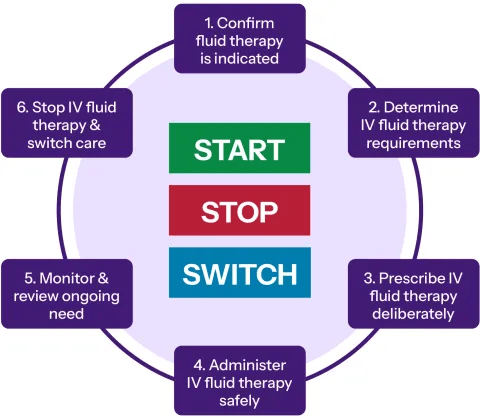
These principles are supported by six practical actions:
- Confirm that IV fluid therapy is indicated.
- Determine the patient’s fluid requirements.
- Prescribe IV fluids deliberately.
- Administer IV fluids safely.
- Monitor the patient and regularly review ongoing need.
- Stop IV therapy and switch care when appropriate.
Reducing Avoidable Harm
The resources also address venous air embolism, a rare but potentially serious complication associated with IV fluid administration. Safe administration practices, appropriate monitoring and careful management of the infusion system remain central to reducing this risk.
The Commission also highlights the importance of avoiding unnecessarily prolonged fasting before procedures. Its Sip Til Send approach allows eligible patients to consume small amounts of clear fluid until they are called to theatre, helping reduce thirst, dehydration, anxiety and potentially avoidable IV fluid use.
Why It Matters
IV fluid therapy should be treated with the same care as any other medicine. Each decision should be based on a clear indication, an appropriate prescription and regular reassessment.
The new national resources provide healthcare services with a practical framework for improving patient safety, reducing unnecessary IV therapy and supporting more sustainable care.
Learn More
Australian Commission on Safety and Quality in Health Care:
https://www.safetyandquality.gov.au/clinical-topics/medicines-safety-and-quality/iv-fluids-therapy-management