
Rethinking PICC Choices: Understanding Implementation in Real-World Hospitals
 "Rethinking PICC Choices: Understanding Implementation in Real-World Hospitals")
Study Overview
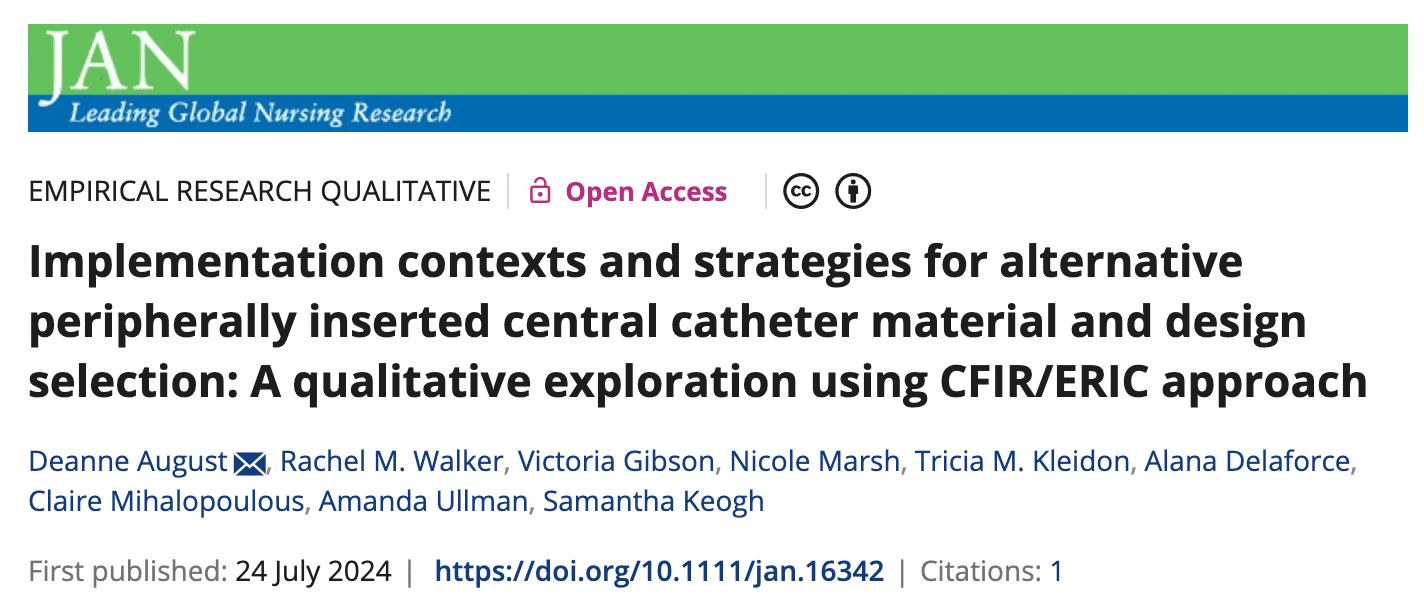
This qualitative study explored the real-world barriers and enablers to selecting alternative peripherally inserted central catheter (PICC) materials and designs in three Australian hospitals. Researchers conducted semi-structured interviews with 23 PICC inserters, users, and purchasers to understand how local contexts and stakeholder perspectives affect implementation of innovations like hydrophobic or antimicrobial PICCs. The study used the Consolidated Framework for Implementation Research (CFIR) and mapped findings to the Expert Recommendations for Implementing Change (ERIC) to guide future strategies.
Key Findings
- Familiarity trumps innovation: Most clinicians favored familiar PICC brands and designs over new materials, even when evidence suggested potential benefits.
- Evidence gaps vs real-world constraints: Although trial evidence is valued, decisions are more heavily influenced by stock availability, insertion logistics, and existing hospital purchasing contracts.
- Implementation needs champions: Change is often driven by local leaders, yet varying levels of staff familiarity, rotation, and siloed communication hinder broad uptake.
- Patient-centred care under-prioritized: PICC choices rarely considered patient-specific risks (e.g., thrombosis, infection) unless prompted, highlighting a need for better alignment between clinical decisions and patient needs.
- ERIC strategies identified: Key strategies to support change included promoting adaptability, obtaining consumer feedback, accessing funding, and building stronger implementation networks.
Implications
For PICC material innovations to succeed, healthcare settings must go beyond trial data. Implementation must be tailored to context—factoring in leadership engagement, clinician education, patient risk profiles, and logistical constraints. Hospitals should establish clearer feedback loops, audit systems, and support champions to drive sustainable change. Most importantly, patient needs and perspectives should become central to decision-making.
Read more:https://onlinelibrary.wiley.com/doi/10.1111/jan.16342
Authors: Deanne August, Rachel M. Walker, Victoria Gibson, Nicole Marsh, Tricia M. Kleidon, Alana Delaforce, Claire Mihalopoulous, Amanda Ullman, Samantha Keogh